Strength Training Protocol for Cyclists Over 50
The exact off-season and in-season strength program that keeps you powerful on the bike—without spending hours in the gym

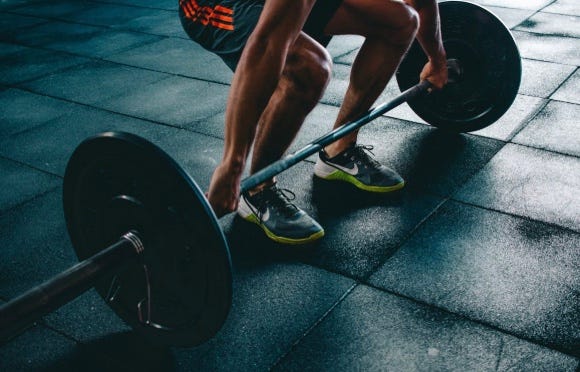
After 33 years of riding road, gravel, and mountain bikes, and 27 years of coaching many cyclists, I’ve watched the same mistake cost riders their best years:
They avoid the weight room.
They tell themselves more bike time is always better. They believe strength training will make them “bulky and slow.” They think lifting is for younger athletes who still have something to prove.
And year after year, they watch their power fade. They struggle on climbs they used to crush. They lose their ability to punch through headwinds or recover from hard efforts.
Here’s what I know: Strength training after 50 isn’t optional—it’s your performance multiplier.
The strongest riders in your group aren’t struggling up climbs because they can push bigger gears longer. They have the foundational strength to generate force efficiently, maintain form when fatigued, and protect their bodies from injury.
This myth—that strength training will make you bulky and slow—cost me years of potential gains. I avoided the weight room, thinking more bike time was always better.
Then I started lifting heavy twice per week. The results were immediate:
More strength through more range of motion
Reduced risk of injury
Improved body control
Improved core strength which translates into more strength in all riding positions and scenarios
Minimal strength and torque lost between upper and lower body during big efforts
Think of your body like a firehose coupling that joins sections of hose together. If the coupling leaks, you lose water pressure before it reaches the tip where you need it to put out the fire. Your core is that coupling—it connects your upper and lower body. Weak core and whole body strength means that your maximal power is well below what it should be, and your weak core means you are losing a good amount of that substandard power. You generate force, but it doesn’t all make it to where it matters. Strong core and whole body strength? Maximum power transfer with minimal loss.
You gotta be strong if you wanna be fast.
But here’s the problem: most cyclists who do lift weights are doing it wrong. They’re either doing random exercises with no progression, or they’re following bodybuilder programs that create fatigue without functional strength gains.
What you need is a protocol designed specifically for cyclists over 50—one that builds serious strength in the off-season and maintains it efficiently during the riding season.
Let me show you exactly how to do it.
The Two-Phase Approach: Build in Winter, Maintain in Season
Strength training for cyclists isn’t one-size-fits-all year-round. Your body has different needs in different training phases.
Off-season (typically November-January): Build or rebuild foundational strength using compound movements and progressive overload.
In-season (typically February-October): Maintain the strength you built using daily bodyweight exercises that don’t interfere with bike training.
This two-phase approach is critical. You can’t build new strength while simultaneously training hard on the bike—your body can’t adapt to both stressors at once. And you can’t maintain strength without consistent stimulus, even if it’s minimal.
Let’s break down each phase.
Phase 1: Off-Season Building Protocol (November-February)
Goal: Build foundational strength that translates to the bike.
Frequency: 2 sessions per week, separated by at least 2 days.
Duration: 45-60 minutes per session.
Focus: Compound movements, multi-joint exercises, progressive overload.
Why Compound Movements?
Compound movements involve multiple joints and muscle groups working together—just like cycling. Squats, deadlifts, presses, and pulls teach your body to generate force efficiently and transfer power from your legs through your core to the pedals.
Isolation exercises (bicep curls, leg extensions) don’t translate to cycling performance. Save your time and energy for movements that matter.
The Core Exercises
These five movement patterns form the foundation of your off-season strength program:
1. Squat (Leg Strength + Core Stability)
Why it matters: Builds the leg strength needed for climbing and sprinting, plus the core stability to maintain position under load.
Exercise options:
Goblet Squat (beginner): Hold a kettlebell or dumbbell at chest level
Back Squat (intermediate/advanced): Barbell across shoulders
Front Squat (advanced): Barbell in front of shoulders
Protocol:
Weeks 1-4: 3 sets x 8-10 reps
Weeks 5-8: 3 sets x 6-8 reps (increase weight)
Weeks 9-12: 4 sets x 4-6 reps (increase weight)
Key cues:
Feet shoulder-width apart
Descend until thighs are parallel to ground (or as deep as mobility allows)
Keep chest up, core braced
Drive through full foot, not just toes
Full range of motion—don’t cut depth short
2. Deadlift (Posterior Chain + Hip Power)
Why it matters: Develops the glutes, hamstrings, and low back—the engine behind every pedal stroke. Hip extension power is cycling power.
Exercise options:
Romanian Deadlift (beginner): Emphasizes hamstrings, less technical
Conventional Deadlift (intermediate): Full hip hinge pattern
Trap Bar Deadlift (all levels): Easier to learn, more back-friendly
Protocol:
Weeks 1-4: 3 sets x 8-10 reps
Weeks 5-8: 3 sets x 6-8 reps (increase weight)
Weeks 9-12: 4 sets x 4-6 reps (increase weight)
Key cues:
Hip hinge, not squat—push hips back first
Keep bar close to body throughout movement
Chest up, shoulders back
Drive through heels, squeeze glutes at top
Neutral spine—no rounding
3. Press (Upper Body + Core Integration)
Why it matters: Upper body and core strength stabilize you on the bike, especially on climbs, descents, and technical terrain. Strong shoulders and arms mean better bike control.
Exercise options:
Push-ups (beginner): Build base strength
Overhead Press (intermediate): Barbell or dumbbells, standing
Bench Press (all levels): Develops pushing strength
Protocol:
Weeks 1-4: 3 sets x 10-12 reps
Weeks 5-8: 3 sets x 8-10 reps (increase weight)
Weeks 9-12: 4 sets x 6-8 reps (increase weight)
Key cues:
Brace core before each rep
Full range of motion
Control the descent, explosive press
Don’t arch back excessively
4. Pull (Back + Grip Strength)
Why it matters: Counterbalances all the forward flexion from cycling. Prevents rounded shoulders, builds back strength for climbing out of the saddle, improves grip for technical riding.
Exercise options:
Inverted Rows (beginner): Bodyweight, using bar or TRX
Bent Over Barbell Rows or Dumbbell Rows (intermediate/advanced): Free weight pulling
Pull-ups/Chin-ups (intermediate/advanced): Full bodyweight
Protocol:
Weeks 1-4: 3 sets x 8-10 reps (or max reps if doing pull-ups)
Weeks 5-8: 3 sets x 6-8 reps (increase difficulty/weight)
Weeks 9-12: 4 sets x 4-6 reps (increase difficulty/weight)
Key cues:
Pull shoulder blades down and back first
Full range—chin over bar for pull-ups, bar to chest for rows
Control descent
No swinging or momentum
5. Single-Leg Work (Balance + Unilateral Strength)
Why it matters: Cycling is a bilateral movement, but imbalances are common. Single-leg work corrects asymmetries and builds stability.
Exercise options:
Split Squats (beginner/intermediate): Rear foot elevated
Lunges (all levels): Forward, reverse, or walking
Step-ups (all levels): Box or bench, weighted
Protocol:
Weeks 1-4: 3 sets x 10 reps per leg
Weeks 5-8: 3 sets x 8 reps per leg (increase weight)
Weeks 9-12: 3 sets x 4-6 reps per leg (increase weight)
Key cues:
Control descent, stable torso
Drive through heel of working leg
No knee caving inward
Full range of motion
Sample Off-Season Training Week
Monday: Lower Body Focus
Warm-up: 10-15 minutes easy cardio + dynamic stretching
Squat: 3 sets x 8 reps
Deadlift: 3 sets x 8 reps
Split Squats: 3 sets x 10 reps per leg
Core work: Planks, dead bugs, or pallof presses (3 sets)
Cool-down: Static stretching
Thursday: Upper Body Focus
Warm-up: 10-15 minutes easy cardio + dynamic stretching
Overhead Press: 3 sets x 10 reps
Pull-ups or Rows: 3 sets x 8 reps
Push-ups: 3 sets x 12 reps
Core work: Planks, side planks, bird dogs (3 sets)
Cool-down: Static stretching
Rest of week:
Easy rides or complete rest days
Light mobility work as needed
Progressive Overload: The Key to Strength Gains
Progressive overload means gradually increasing the demands on your muscles over time. Without it, you’re just maintaining—not building.
How to progress:
Add reps: If the protocol calls for 3 sets x 8 reps and you can do 10 reps with good form, increase the weight next session.
Add weight: Once you hit the top of the rep range consistently, add 5-10 lbs (2.5-5 kg) to the exercise.
Improve form: Better range of motion and control = more muscle recruitment = more strength.
Phase 2: In-Season Maintenance Protocol (March-October)
Goal: Maintain the strength you built without interfering with bike training.
Frequency: Daily.
Duration: 15-20 minutes.
Focus: Bodyweight strength movements, movement quality, minimal fatigue.
Why Daily Bodyweight Work?
During the riding season, your bike training takes priority. You can’t afford to be sore or fatigued from heavy lifting when you have hard rides or events on the calendar.
But if you stop strength training entirely, you’ll lose what you built. Strength decays without stimulus.
The solution: daily bodyweight strength movements to slow the loss of absolute strength without creating recovery debt.
The In-Season Daily Routine
This is Part 2 of the Morning 10’s routine. Perform this circuit daily, ideally in the morning before your ride or on rest days.
Total time: 15-20 minutes
The Five Essential Movements
All exercises: 2 sets x 10 reps
1. Push-ups
Why: Maintains upper body and core strength
Modifications: Elevate hands on bench (easier) or add tempo (slower descent for harder)
2. Bodyweight Squats
Why: Maintains leg strength and mobility
Focus: Full range of motion, controlled tempo
3. Hip Hinge (Dowel Deadlift or Single-Leg RDL)
Reps: 2 sets x 10 reps per leg (if single-leg) or 2 sets x 10 reps (if dowel)
Why: Maintains posterior chain strength and hip mobility
Focus: Perfect form, feel the hamstrings and glutes
4. Lunges (Forward, Reverse, or Walking)
Reps: 2 sets x 10 reps per leg
Why: Maintains single-leg strength and balance
Focus: Knee tracking, stable torso
5. Pull-ups or Inverted Rows
Reps: 2 sets x as many as possible with good form (aim for 10)
Why: Counteracts cycling’s forward posture
Modifications: Use bands for assistance or elevate feet on rows for difficulty
Core Bonus (optional, 5 minutes):
Planks: 30-60 seconds x 2
Side planks: 30 seconds per side x 2
Dead bugs or bird dogs: 10 reps per side x 2
Sample In-Season Week
Monday:
Morning: Daily bodyweight circuit (15 min)
Ride: Hard bike ride
Tuesday:
Morning: Daily bodyweight circuit (15 min)
Ride: Easy recovery ride
Wednesday:
Morning: Daily bodyweight circuit (15 min)
Ride: Hard bike ride
Thursday:
Morning: Daily bodyweight circuit (15 min)
Ride: Easy recovery ride or rest
Friday:
Morning: Daily bodyweight circuit (15 min)
Ride: Moderate bike ride
Saturday:
Morning: Daily bodyweight circuit (15 min)
Ride: Hard bike ride or event
Sunday:
Morning: Daily bodyweight circuit (15 min)
Ride: Long endurance ride or rest
Key principle: The bodyweight work takes 15-20 minutes and creates minimal fatigue. It’s a maintenance dose—not a workout.
Movement Patterns: The Foundation of Everything
Whether you’re in the off-season building phase or in-season maintenance phase, movement quality matters more than the weight you’re lifting or the reps you’re doing.
Poor movement patterns create compensation, which leads to pain, which limits your cycling performance.
The Five Functional Movement Patterns
Every strength exercise falls into one of these categories:
Push - Pressing movements (push-ups, overhead press, bench press)
Pull - Pulling movements (rows, pull-ups, lat pulldowns)
Squat - Knee-dominant leg movements (squats, goblet squats)
Hinge - Hip-dominant leg movements (deadlifts, RDLs)
Lunge - Single-leg movements (lunges, split squats, step-ups)
Your program should include all five patterns every week. This ensures balanced strength development and prevents imbalances that lead to injury.
How to Check Your Movement Quality
Do these exercises in front of a mirror (or record yourself on your phone):
Push-up: Are your hips sagging? Is your head jutting forward? Can you maintain a straight line from head to heels?
Squat: Do your knees cave inward? Does your chest collapse forward? Can you reach parallel depth without rounding your lower back?
Hinge: Are you squatting instead of hinging? Is your back rounding? Can you feel the stretch in your hamstrings?
Lunge: Is your front knee tracking over your toes (not caving in)? Is your torso upright? Are you stable and balanced?
Pull: Are you using momentum or control? Can you pull your shoulder blades down and back? Is your core engaged?
If you notice compensations or limitations, reduce the difficulty and focus on perfecting the pattern. Perfect practice makes permanent.
Common Mistakes to Avoid
Mistake #1: Training Too Heavy During Riding Season
Heavy lifting creates fatigue that interferes with bike training. Save the heavy loads for the off-season. During riding season, bodyweight is enough to maintain a lot of the absolute strength built during the off-season.
Mistake #2: Ignoring Single-Leg Work
Bilateral exercises (squats, deadlifts) are important, but they can hide imbalances. Single-leg work exposes and corrects asymmetries. Don’t skip it.
Mistake #3: Doing Random Exercises
“I’ll just do a few curls and some leg presses” doesn’t work. You need a structured program with progressive overload. Follow the protocol.
Mistake #4: Prioritizing Strength Over the Bike In-Season
During riding season, the bike comes first. Strength training is maintenance, not the focus. If you’re too fatigued from lifting to ride well, you’re doing too much.
How Strength Training Integrates with the 3 Big Days Rule
Remember the 3 Big Days Rule: you can only handle 3 big training stressors per week.
In the off-season:
Strength days should occur on the same days as other big rides (refer to Post #3: “The Data That Actually Matters”)
Doing strength and big bike days on the same days leaves 3 complete recovery days and allows riders to increase both absolute strength and bike-specific strength, skills, and endurance
In-season:
Bodyweight strength work does NOT count as a big day—it’s maintenance
Your 3 big days are all bike-focused (intervals, long rides, races)
Strength work happens every day but creates minimal fatigue
This is how you maintain the strength you’ve built in the off-season without compromising bike fitness, and maintain that strength in-season without interfering with your riding.
Your 12-Week Off-Season Strength Building Plan
Here’s the complete protocol, ready to implement:
Weeks 1-4: Foundation Phase
Focus: Learn movements, build base strength
Squat: 3 x 8-10 reps
Deadlift: 3 x 8-10 reps
Press: 3 x 10-12 reps
Pull: 3 x 8-10 reps
Single-leg: 3 x 10 reps per leg Frequency: 2x per week
Weeks 5-8: Strength Phase
Focus: Increase load, reduce reps
Squat: 3 x 6-8 reps (increase weight)
Deadlift: 3 x 6-8 reps (increase weight)
Press: 3 x 8-10 reps (increase weight)
Pull: 3 x 6-8 reps (increase weight)
Single-leg: 3 x 8 reps per leg (increase weight) Frequency: 2x per week
Weeks 9-12: Peak Strength Phase
Focus: Max strength development
Squat: 4 x 4-6 reps (increase weight)
Deadlift: 4 x 4-6 reps (increase weight)
Press: 4 x 6-8 reps (increase weight)
Pull: 4 x 4-6 reps (increase weight)
Single-leg: 3 x 4-6 reps per leg (increase weight) Frequency: 2x per week
Week 13+: Transition to In-Season Maintenance
Begin daily bodyweight circuit (15-20 min)
Reduce or eliminate heavy lifting
Increase bike training volume
What You’ll Gain
After 12 weeks of off-season strength building, you’ll notice:
On the bike:
More power on climbs—you can push bigger gears longer
Better sprint power—you have the strength to accelerate hard
Improved endurance—stronger muscles fatigue more slowly
Better bike handling—core and upper body strength = control
Off the bike:
Reduced injury risk—stronger muscles and connective tissue
Better posture—counteracting cycling’s forward flexion
Improved mobility—strength through full range of motion
More confidence—you feel strong, capable, powerful
Long-term:
Slower age-related strength decline
Better bone density
Maintained muscle mass
Sustained performance into your 60s, 70s, and beyond
The Bottom Line
Strength training isn’t a nice-to-have for cyclists over 50. It’s essential.
Your body is aging. Muscle mass declines. Bone density decreases. Power fades.
But strength training reverses these trends. Two sessions per week in the off-season builds serious strength. Fifteen minutes per day in-season maintains it.
The protocol is simple:
Off-season: Build with compound movements, progressive overload, 2x per week for 12 weeks
In-season: Maintain with daily bodyweight circuits, 15-20 minutes
No gym membership required. No complicated equipment. Just consistent effort on movements that matter.
The strongest riders in your group aren’t there by accident. They’re there because they do the work others skip.
Start now. Twelve weeks from today, you’ll be stronger, more powerful, and riding better than you have in years.
Ride on.
THE EVER STRONG CYCLIST ON YOUTUBE
The 5 Pillars methods on video — see the framework in action.
https://www.youtube.com/@EverStrongCyclist